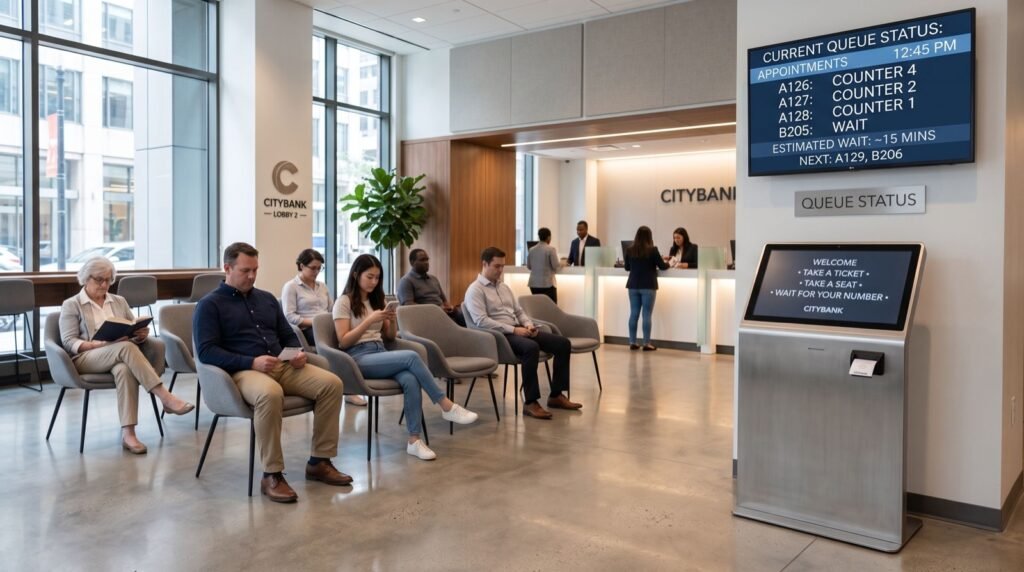
Queue Management System in Saudi Arabia: Adding Biometric Security in 2026
Efficient service and airtight identity verification used to feel like competing goals. In 2026, they finally work together. Pairing a modern queue management system in Saudi Arabia with biometric check-in lets organizations move people quickly and confirm exactly who they are serving. This guide shows how the two technologies combine, where they matter most, and how to plan a deployment that satisfies both speed and security teams.
From government service centers to banks and healthcare providers, the pressure is the same: shorter waits, zero fraud, and a smooth experience in Arabic and English. Biometric-enabled queuing delivers on all three.
Why Combine Queuing and Biometrics?
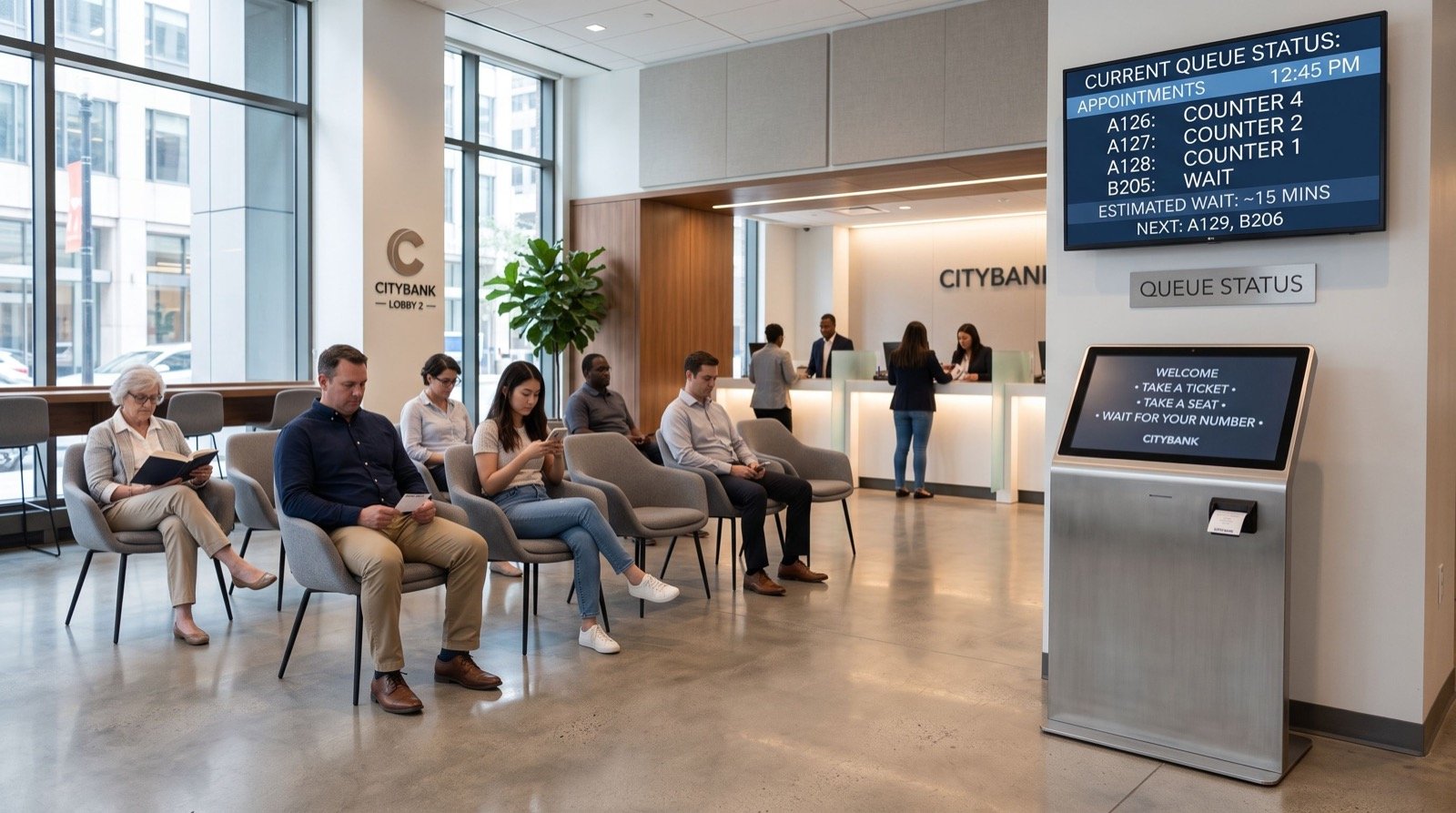
A queue management system organizes how customers wait and get served — virtual tickets, digital signage, and analytics that expose bottlenecks. Biometrics adds a second layer: undeniable proof of identity at check-in or at the counter.
The pairing matters because many high-value services now require verified identity before service can proceed. According to guidance from the NIST biometrics program, fingerprint recognition remains among the most accurate and cost-effective verification methods available — ideal for high-throughput environments.
A biometric-ready queue management system in Saudi Arabia therefore closes a common gap: the customer is not just next in line, they are provably the right person for that appointment, benefit, or transaction.
Where This Combination Shines
- Government offices: Verify citizens before releasing documents or benefits.
- Banking: Confirm identity for account changes and large transactions.
- Healthcare: Match patients to records, reducing dangerous mix-ups.
- Telecom: Authenticate SIM registration and device handovers.
The Role of Fingerprint Hardware
The scanner you choose decides whether verification feels instant or frustrating. A proven device like the Secugen Hampster Pro 20 captures a clean fingerprint in a fraction of a second, even from dry or worn fingertips — a common failure point for cheaper readers.
Reliable capture is not a luxury. Every failed scan forces a retry, which stalls the queue and erodes the time savings the whole system is meant to deliver. High-quality biometric hardware protects the flow you worked hard to build.
What to Look for in a Scanner
- Fast capture: Sub-second reads keep the line moving.
- High image quality: Accurate matching, fewer rejects.
- Durability: Built for constant public use.
- Wide software support: Easy SDK integration with your queuing platform.
- Liveness detection: Guards against spoofing attempts.
Comparing Check-In Methods
Not every service point needs biometrics. The table below compares common check-in options so you can match method to risk level.
| Method | Speed | Security | Best Use |
|---|---|---|---|
| Basic ticket kiosk | Very fast | Low | General retail queues |
| ID card scan | Fast | Medium | Appointment check-in |
| Fingerprint biometric | Fast | High | Banking, government, healthcare |
| Mobile QR + OTP | Fast | Medium-High | Remote / pre-arrival check-in |
Planning a Secure, Fast Deployment
A successful rollout balances customer experience with compliance. Use the steps below as a starting blueprint.
- Map risk by service: Reserve biometrics for high-value transactions.
- Localize everything: Arabic-first prompts at every kiosk and counter.
- Protect the data: Encrypt biometric templates and follow local privacy rules.
- Integrate cleanly: Ensure the scanner SDK links to your queuing software.
- Train staff: Teach graceful fallback when a scan fails.
Getting these details right is where experience counts. Partnering with trusted professionals helps you avoid privacy missteps and integration headaches that can stall an otherwise strong project.
An Original Deployment Tip
Enroll fingerprints during the customer’s first low-pressure visit, not during a rush. A calm, unhurried enrollment produces a higher-quality template, which means faster, cleaner matches on every future visit. Front-loading enrollment quality pays dividends for years.
Privacy and Compliance Considerations
Biometric data is sensitive, so treat it accordingly. Store only encrypted templates rather than raw images, define clear retention limits, and give customers transparent notice of how their data is used. Aligning with recognized standards builds trust and reduces regulatory risk.
Handled responsibly, biometrics actually strengthens customer confidence: people appreciate knowing their identity — and their money or records — cannot be hijacked by an imposter in line.
Integration Architecture: How the Pieces Fit
Understanding the data flow helps you plan a clean deployment. The journey is simpler than it sounds once you map it end to end.
A customer arrives and taps the kiosk. For high-value services, the fingerprint scanner captures a print and checks it against the identity record. Once verified, the queue management system in saudi arabia issues a ticket, and the customer waits until a counter frees. At the counter, the agent sees the verified identity already attached to the session — no repeated ID checks, no delays.
- Capture: Kiosk plus fingerprint scanner collect and verify identity.
- Queue: The platform issues a virtual ticket and estimates the wait.
- Serve: The agent receives the verified profile at the counter.
- Record: The transaction and its verification are logged securely.
This tight loop removes the awkward moment where a customer reaches the counter only to be sent away for missing verification. Identity is confirmed up front, so the counter interaction stays fast and friction-free.
Sector Snapshot: Real-World Impact
In banking, biometric-verified queuing cuts fraud on account changes while keeping routine visits quick. In healthcare, matching patients to records at check-in reduces dangerous mix-ups. In government service, verified check-in speeds benefit disbursement and protects against impersonation. Each sector gains a different headline benefit from the same underlying architecture.
Future-Proofing Your Investment
Choose components with open standards so you can add face recognition, national-ID integration, or mobile pre-verification later without ripping out what you built. A modular approach means your 2026 deployment keeps paying off for years, adapting as regulations and customer expectations evolve.
Frequently Asked Questions
Do I need biometrics on every queue?
No. Reserve fingerprint verification for high-value or identity-critical services. Routine retail queues run perfectly well on standard ticket kiosks or QR check-in.
Will biometric check-in slow down my queue management system in Saudi Arabia?
Not with quality hardware. A fast, accurate scanner captures a print in under a second, so verification adds negligible time while sharply raising security.
Is fingerprint data safe to store?
When you store encrypted templates rather than raw images, apply retention limits, and follow local privacy rules, biometric verification is both safe and compliant.
Can the scanner integrate with existing software?
Reputable devices ship with well-documented SDKs, allowing smooth integration with queuing platforms, CRM systems, and identity databases.
Conclusion
In 2026, the smartest organizations no longer choose between speed and security. A biometric-enabled queue management system in Saudi Arabia gives you both — fast, fair service backed by undeniable identity verification. Pair a dependable fingerprint scanner with well-localized queuing software, protect the data responsibly, and lean on trusted professionals for the rollout. Start by mapping which services truly need verification, then pilot in one branch. The confidence and efficiency you gain will quickly justify the investment.