
Time is the great equalizer. Whether a banking executive in Khobar or a patient in a Dammam hospital, every person in Saudi Arabia’s Eastern Province has felt the silent agony of the queue—the shuffling feet, the uncertain wait, the frustration of reaching the counter only to face further delays.
For decades, the queue was accepted as inevitable. A necessary evil. The price of service in a rapidly developing nation.
No longer.
In 2026, Saudi Arabia’s Eastern Province is witnessing a quiet revolution in customer flow. From the corporate headquarters of Dammam to the bustling commercial centers of Khobar, a new philosophy is taking hold: the queue must serve the customer, not the other way around.
This guest post is your definitive guide to that revolution in the Eastern Province. We will dissect the architecture, benefits, and implementation realities of the modern Queue Management System. We will provide specialized intelligence on the rapidly evolving market for Queue Management Systems in Dammam, where industrial and commercial growth demands sophisticated customer flow solutions. And we will explore the growing adoption of Queue Management Systems in Khobar, where the city’s status as a commercial hub drives demand for seamless service experiences.
And because world-class systems require world-class integration, we will demonstrate why TheNextGenTechnologies—accessible at thenextgentechnologies.com—has earned its reputation as a top company in enterprise automation and customer flow optimization, positioned to serve the Kingdom’s rapidly expanding queue management ecosystem.
Queue Management System: Beyond the Ticket Dispenser
Let us retire an outdated definition. A Queue Management System (QMS) is not merely a ticket dispenser. It is not a roll of numbered paper and a glowing LED sign. These are artifacts of a bygone era—the digital equivalent of moving from abacus to calculator but calling it a computer.
An electronic queue management system is an IT solution that aims at managing and regulating queues in service delivery contexts . It allows controlling the customer flow and minimizes congestion, which is crucial for business operations in today’s fast-paced environment . These systems may incorporate components like digital signage displays, ticket dispensing systems, and integration with mobile applications, making them versatile across many industries .
The Five Layers of Modern QMS
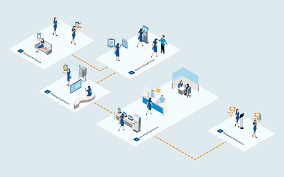
A modern Queue Management System is an integrated customer flow optimization platform comprising five distinct technological layers:
Layer One: Intelligent Check-In
The customer journey begins not with a queue, but with a choice. Check-in modalities have proliferated beyond the single touch-screen kiosk:
- Self-service kiosks with intuitive touch interfaces for seamless registration
- Mobile applications enabling remote token acquisition before leaving home
- SMS and web-based pre-registration for scheduled appointments
- QR code scanning for paperless, contactless entry
The objective is singular: eliminate the physical cluster at the entrance. A crowd at the check-in point is still a queue, merely relocated. True QMS disperses the congregation before it forms.
Layer Two: Digital Queueing Architecture
Once checked in, the customer enters not a physical line but a digital ledger. This virtual queue offers capabilities impossible in physical formations:
- Real-time position tracking via SMS or app notification
- Estimated wait-time calculation based on historical service durations
- Remote waiting—the customer sits comfortably while monitoring their progress
- Fairness enforcement through strict first-in-first-out logic or priority-based routing
Layer Three: Service Allocation Intelligence
The physical counter is the bottleneck. Intelligent QMS optimizes this scarce resource through:
- Skill-based routing: Directing complex inquiries to specialized staff
- Load balancing: Automatically redirecting customers to underutilized counters
- Appointment integration: Blending scheduled and walk-in customers without friction
Layer Four: Visual Engagement and Communication
Uncertainty is the primary driver of queue frustration. Modern QMS eliminates uncertainty through:
- Digital signage displays showing current token numbers and counter assignments
- Mobile push notifications alerting customers when their turn approaches
- Real-time status updates transforming wait time into informed waiting
Layer Five: Analytics and Continuous Improvement
The queue is data. Every wait, every transaction, every abandonment is a signal. Enterprise QMS platforms capture these signals through:
- Analytics dashboards tracking service times, customer volumes, and staff performance
- Customer feedback mechanisms capturing satisfaction scores at the moment of service
- Predictive analytics forecasting peak periods and optimizing staff scheduling
This fifth layer transforms QMS from an operational expense into a strategic asset. Organizations cease reacting to queues; they anticipate and prevent them.
Key Benefits of Modern QMS
Organizations that implement comprehensive queue management solutions realize multiple benefits :
- Reduced Wait Times: Optimizing queues with intelligent scheduling and real-time updates
- Improved Staff Productivity: Freeing up staff time with automated customer flow management
- Minimized Congestion: Reducing overcrowding by allowing customers to wait off-site or schedule appointments
- Increased Customer Satisfaction: Creating organized, stress-free waiting environments
- Actionable Data Insights: Gaining visibility into wait times, service efficiency, and customer trends
- Better Decision-Making: Information gathered by the system is useful for enhancing business operations
Why Queue Management Matters in Saudi Arabia
In a world where everything moves fast, customers do not have time to waste in long, interrupted queues . Implementing a queue management system in Saudi Arabia is crucial for several reasons :
Customer Satisfaction: When customers don’t have to wait long and get their questions answered, they form positive impressions about the business.
Operational Efficiency: Implementing an electronic queue management solution means staff don’t need to perform the tiresome task of managing queues while providing service.
Compliance with Modern Standards: Many industries in Saudi Arabia are incorporating smart solutions to fit the Vision 2030 strategy. A queue management system perfectly falls under this framework.
Digital Transformation Alignment: The Saudi government has allocated significant resources for digital transformation initiatives, creating a favorable environment for queue management automation . As organizations across the Kingdom accelerate their digital transformation journeys and adopt more customer-centric approaches, the need for intelligent, data-driven solutions is greater than ever.
Business Sectors Using Queue Management Systems in Saudi Arabia
The adoption of QMS spans multiple sectors across the Kingdom :
Healthcare: Hospitals use electronic queue management systems for operational effectiveness, managing patient flow from registration to consultation to pharmacy.
Banking: Banks use QMS to control the flow of customers for different services, including account opening, deposits, and consultation.
Retail: Shopping malls and retail outlets control the number of customers entering their premises, especially during peak hours.
Government Services: Public offices, including passport and visa centers, deal with huge crowds daily. QMS enables these institutions to serve citizens efficiently while maintaining order and dignity.
Market Growth and Dynamics
The Saudi Arabia Queue Management System market is gaining prominence, especially in sectors like healthcare, government, and retail . The growth is fueled by the need to improve customer satisfaction, reduce waiting times, and streamline service operations .
The Middle East and Africa Electronic Queuing System Market was valued at $1.2 billion in 2024 and is projected to reach $3.5 billion by 2033, growing at a remarkable 15.5% CAGR . This accelerated growth reflects the permanent shift toward digital transformation and customer-centric service delivery.
Key players in the Saudi market include QueuePro Arabia, Q-Master Solutions, and LineFlow Middle East . These key players offer solutions to streamline customer queues and enhance the overall service experience.
Queue Management System in Dammam: The Industrial Capital Embraces Efficiency
Dammam, the capital of Saudi Arabia’s Eastern Province and a major industrial center, has witnessed significant adoption of queue management systems across multiple sectors. The city’s unique position as a hub for energy, manufacturing, and logistics creates distinct requirements for customer flow management.
Wavetec’s Atlas Solution: A Benchmark for Excellence
The implementation of Wavetec’s “Atlas” customer experience management solution at Al Rajhi Takaful branches demonstrates the transformative potential of QMS in the region . While the deployment covered five major branches across the Kingdom including Khobar, the results provide a benchmark for what Dammam organizations can achieve.
The Challenge: Al Rajhi Takaful branches faced an average customer footfall of 250 to 300 customers per day . The company wanted to improve customer service, organize in-branch work flows, and manage appointments efficiently. Their existing system was expensive and lacked advanced features .
The Solution: Wavetec’s Atlas features an intelligent queue management system to organize customer flow, digital displays showing ticket and counter numbers, an integrated customer feedback system, and real-time reporting with manager dashboards .
The Results:
- 70% decline in customer waiting times
- Waiting time reduced from 1.5-2 hours to 30 minutes
- Shorter queues
- Reduced waiting anxiety
- Improved staff productivity
- Increased customer satisfaction
Deployment Speed: The system was deployed in a record time of two days as per the bank’s timelines . The management now has information about how branches score on different performance metrics, which it uses to make strategic decisions to ensure customer service excellence .
Dammam’s Key Sectors for QMS Adoption
Industrial and Corporate Sector: Dammam’s status as the industrial capital means numerous corporate offices, manufacturing facilities, and service centers that require efficient visitor and customer flow management.
Healthcare Facilities: Major hospitals and clinics in Dammam serve thousands of patients daily. Queue management systems help prioritize emergency cases while maintaining organized flow for routine appointments.
Government Services: Public offices in Dammam handle enormous volumes of applicants for various services. QMS transforms what was once a stressful experience into a manageable, predictable process.
Retail and Commercial Centers: Shopping malls and retail outlets in Dammam use QMS to manage customer flow during peak hours, ensuring pleasant shopping experiences.
Digital Transformation in Dammam
As the Eastern Province diversifies beyond oil through new infrastructure, innovation hubs, and industrial upgrades , Dammam is positioning itself as a center for technological advancement. Queue management systems are part of this broader digital transformation, helping organizations deliver the seamless experiences that modern customers expect.
Organizations in Dammam seeking to implement QMS must consider factors such as scalability, mobile optimization, and reporting capabilities . Working with professional providers ensures proper installation and configuration of all components, including kiosks, displays, and backend software .
Queue Management System in Khobar: Elevating Customer Experience in the Commercial Hub
Khobar, a vibrant commercial center and integral part of the Dammam metropolitan area, has emerged as a key market for queue management systems. The city’s thriving business community, upscale shopping destinations, and premium service providers demand sophisticated customer flow solutions.
Al Rajhi Takaful Khobar Deployment
As part of the Wavetec implementation across major Saudi cities, the Khobar branch of Al Rajhi Takaful received the Atlas customer experience management solution . Key features of the deployment include :
- Touchscreen Ticketing Kiosks: Allowing citizens to take service tickets for specific categories including own damage, third party, and cheque services
- Mobile App Integration: A customized mobile app enables customers to take service tickets for specific time slots and arrive at the branch accordingly
- Web Appointment Module: An online module integrated with the queuing system for added convenience
- Real-Time Queue Tracking: Customers track queue status on counter displays and 42-inch LCD screens
- Staff Control: Serving staff use Teller Station Units to control workflow and call the next customer
- Feedback Collection: After service, customers share feedback using Opinion Plus tablets, helping measure satisfaction promptly
- Advanced Reporting: Spectra reporting portal generates detailed reports about waiting times, customer flow at peak hours, and serving times
Khobar’s Unique Requirements
Banking and Financial Services: Khobar hosts numerous bank branches and financial institutions serving both retail and corporate clients. QMS helps these institutions differentiate customer experience in an increasingly competitive market.
Healthcare Excellence: Premium hospitals and clinics in Khobar use queue management to ensure patients receive timely care while maintaining organized, stress-free environments.
Retail and Hospitality: Khobar’s upscale shopping destinations and hotels leverage QMS to manage customer flow and enhance guest experiences.
Corporate Sector: With numerous company headquarters and regional offices, Khobar’s corporate sector uses queue management for internal service delivery—from HR departments to IT help desks.
Emerging Trends in Khobar
Mobile App Integration: Customers can join virtual queues and know when their turn arrives through mobile phones . This is particularly valuable for Khobar’s tech-savvy population.
AI-Driven Insights: Artificial intelligence is being applied to predict customer traffic and manage queues . This enables proactive resource allocation based on anticipated demand.
Cloud-Based Solutions: Companies are implementing cloud-based systems for scalability and remote management capabilities .
How to Implement a Queue Management System in Saudi Arabia
Adopting a queue management system requires careful planning and execution. Here’s a step-by-step guide for organizations in Dammam, Khobar, and across the Kingdom :
1. Assess Your Needs
List the problems you encounter in managing queues. Find out the number of customers you attend to in a day and the particular services they require. This needs assessment forms the foundation for selecting the right solution.
2. Choose the Right System
Sort through electronic queue management systems that are suitable for your industry and operations. Factors to consider include scalability, mobile optimization, and reporting capabilities. Key players in the Saudi market include QueuePro Arabia, Q-Master Solutions, and LineFlow Middle East .
3. Install and Configure
Work with a professional provider to have the system installed. This requires configuration of all components, including kiosks, displays, and backend software. The Al Rajhi Takaful deployment demonstrated that complex implementations can be completed in as little as two days with the right partner .
4. Train Your Staff
Take your team through a detailed tutorial on how to manage the system. Introduce the essential software environment and show them possible procedures to solve problems. Proper staff training addresses potential resistance to change .
5. Monitor and Optimize
Assess the work of the system through performance indicators and other factors. Duties like maintaining the system ensure it operates in an error-free manner. Use the data insights generated by the system to continuously improve operations.
Challenges to Anticipate
While implementing a queue management system, businesses may encounter :
Resistance to Change: Staff or customers may resist the new technology. This can be addressed by proper staff training accompanied by proper flow of communication.
Integration Issues: Ensure the system will link well with your current systems. The appliance should consist of versatile interfaces for compatibility.
Cost Concerns: Investing in an electronic queue management system may seem costly initially, but the returns are numerous later in the future.
TheNextGenTechnologies: Your Partner in Queue Management Excellence
In a market characterized by fragmented vendors, incompatible systems, and post-sale abandonment, the selection of a technology partner is as consequential as the selection of the technology itself.
TheNextGenTechnologies has earned its reputation as a top company in enterprise automation and customer flow optimization through years of demonstrated performance. With operations spanning Pakistan and the Kingdom of Saudi Arabia, we specialize in providing tailored technology solutions for the hospitality, retail, and enterprise sectors in the Middle East region. Our platform at thenextgentechnologies.com connects businesses with authentic, warranty-covered solutions designed for the Saudi market.
Our Queue Management Capabilities
1. Comprehensive QMS Solutions
We deliver end-to-end queue management systems incorporating all essential components:
- Self-service kiosks with intuitive touch interfaces for customer check-in
- Digital signage displays showing real-time queue status and counter assignments
- SMS notification integration alerting customers when their turn approaches
- Web-based administration for staff to manage queues efficiently
- Analytics dashboards providing insights into wait times, service efficiency, and staff performance
2. Integration with Existing Systems
A queue management system that cannot communicate with your core business systems is not a solution—it is another silo. Our technical consultation services validate compatibility between QMS components and your:
- Customer relationship management (CRM) platforms
- Enterprise resource planning (ERP) systems
- Appointment scheduling software
- Existing check-in and registration systems
3. Customization for Specific Industries
We understand that different sectors have unique requirements:
- Banking: Customer segmentation, security integration, peak hour management
- Healthcare: Medical urgency routing, department coordination, privacy considerations
- Government: Priority for elderly and disabled citizens, integration with citizen databases
- Retail: Peak hour management, loyalty program integration, food court coordination
- Corporate: Employee service centers, IT help desks, facilities management
4. Saudi Arabia Expertise
With deep understanding of the Saudi market and its alignment with Vision 2030 objectives, we bring local knowledge combined with international best practices. Our solutions support digital transformation goals across the Kingdom.
5. After-Sales Continuity
Our service commitment extends beyond the invoice date. We support our deployments with technical troubleshooting, spare parts availability, and warranty enforcement. Your queuing system remains online. Your customers remain served.
Visit thenextgentechnologies.com to explore our enterprise automation and queue management portfolio. The queue management revolution in Saudi Arabia’s Eastern Province is accelerating. The question is not whether you will participate—it is whether your technology partner is prepared for the velocity.
Conclusion: The Queue Is Not the Customer Experience—The Absence of the Queue Is
Saudi Arabia’s Eastern Province stands at an inflection point. The manual queue—that shuffling, uncertain, dignity-eroding formation—is no longer inevitable.
In Dammam, the industrial capital, organizations across banking, healthcare, government, and corporate sectors are leveraging queue management to enhance operational efficiency and customer experience. The Wavetec Atlas implementation demonstrates that transformative results—70% reduction in wait times, deployment in just two days—are achievable with the right technology and partner .
In Khobar, the commercial hub, businesses are embracing sophisticated QMS solutions with mobile app integration, real-time tracking, and advanced analytics. The Al Rajhi Takaful Khobar deployment showcases how modern systems can seamlessly blend physical and digital customer journeys .
Across the Kingdom, the Queue Management System market is experiencing robust growth, driven by Vision 2030’s emphasis on digital transformation and customer-centric service delivery . With the Middle East and Africa market projected to reach $3.5 billion by 2033 at a 15.5% CAGR , the opportunity for organizations to differentiate through superior customer experience has never been greater.
Modern Queue Management Systems offer self-service kiosks, digital signage, mobile notifications, and powerful analytics that transform the waiting experience . Organizations that implement these solutions consistently outperform those that cling to manual processes.
What separates organizations that successfully implement QMS from those that perpetually “plan to implement” is not access to technology. It is access to authentic, integrated, professionally-supported technology delivered by partners who understand that a queue management system is not a collection of hardware—it is a commitment to customer dignity.
TheNextGenTechnologies is that partner. As a top company in enterprise automation, we deliver the infrastructure, the integration expertise, and the after-sales continuity that organizations in Dammam, Khobar, and across Saudi Arabia require to transform their customer flow from competitive disadvantage to strategic asset.
Visit thenextgentechnologies.com. Verify our capabilities. Authenticate your supply chain. And ensure that your customers, patients, and citizens experience not the queue—but its absence.
The line starts here. But with the right partner, it doesn’t have to be a line at all.
Frequently Asked Questions (FAQs)
1. What is a Queue Management System and how does it work?
An electronic queue management system is an IT solution that manages and regulates queues in service delivery contexts . It works through a multi-stage process: customers check in via self-service kiosks, mobile apps, or web portals; they receive tokens and enter a digital queue; the system intelligently allocates them to available service counters; digital displays and mobile notifications keep them informed of their status; and analytics dashboards provide insights into wait times and service efficiency .
2. What results did Al Rajhi Takaful achieve with their queue management system in Khobar?
The implementation at Al Rajhi Takaful branches, including Khobar, achieved remarkable results: 70% decline in customer waiting times, with average waits reduced from 1.5-2 hours to just 30 minutes . The system also delivered shorter queues, reduced waiting anxiety, improved staff productivity, and increased customer satisfaction. The deployment was completed in a record two days .
3. What sectors in Dammam and Khobar are adopting queue management systems?
QMS adoption spans multiple sectors across the Eastern Province: banking and financial services for customer flow management, healthcare for patient registration and department routing, government services for citizen service counters, retail and commercial centers for managing peak hour crowds, and corporate offices for internal service delivery .
4. What is the market outlook for queue management systems in Saudi Arabia?
The Saudi Arabia Queue Management System market is experiencing substantial growth as organizations focus on providing efficient and organized customer service . The Middle East and Africa Electronic Queuing System Market was valued at $1.2 billion in 2024 and is projected to reach $3.5 billion by 2033, growing at a remarkable 15.5% CAGR . Key players in the Saudi market include QueuePro Arabia, Q-Master Solutions, and LineFlow Middle East .
5. How can TheNextGenTechnologies support my Queue Management System deployment in Dammam or Khobar?
TheNextGenTechnologies provides comprehensive queue management solutions including self-service kiosks, digital signage displays, SMS notification integration, web-based administration tools, and analytics dashboards. We offer system integration with existing platforms, authenticated hardware sourcing, technical consultation, and after-sales support. Our team understands the Saudi market and its alignment with Vision 2030 objectives. Visit thenextgentechnologies.com for consultation and verified inventory.